If your business uses any chemicals, cleaning products, paints, solvents, adhesives, or similar substances, there is a good chance you are legally required to have a COSHH assessment in place. Most small business owners either don’t know this, or assume it only applies to industrial operations. It doesn’t. COSHH applies to businesses of all sizes — and an HSE inspection without the right paperwork can be costly.
This post covers exactly what COSHH is, which businesses it applies to, and what you need to have in place.
What is COSHH?
COSHH stands for Control of Substances Hazardous to Health. It is a set of regulations — the Control of Substances Hazardous to Health Regulations 2002 — that require employers to prevent or adequately control their employees’ exposure to substances that may cause ill health.
In practical terms, this means identifying every hazardous substance your business uses, assessing the risks, putting controls in place, and documenting all of it. It is not optional, and it is not just for factories.
Which substances does COSHH cover?
COSHH covers a wider range of substances than most people expect. If a product has a hazard warning symbol on the label — a flame, skull and crossbones, exclamation mark, or any of the standard GHS/CLP pictograms — it almost certainly falls under COSHH.
Common substances that require a COSHH assessment include:
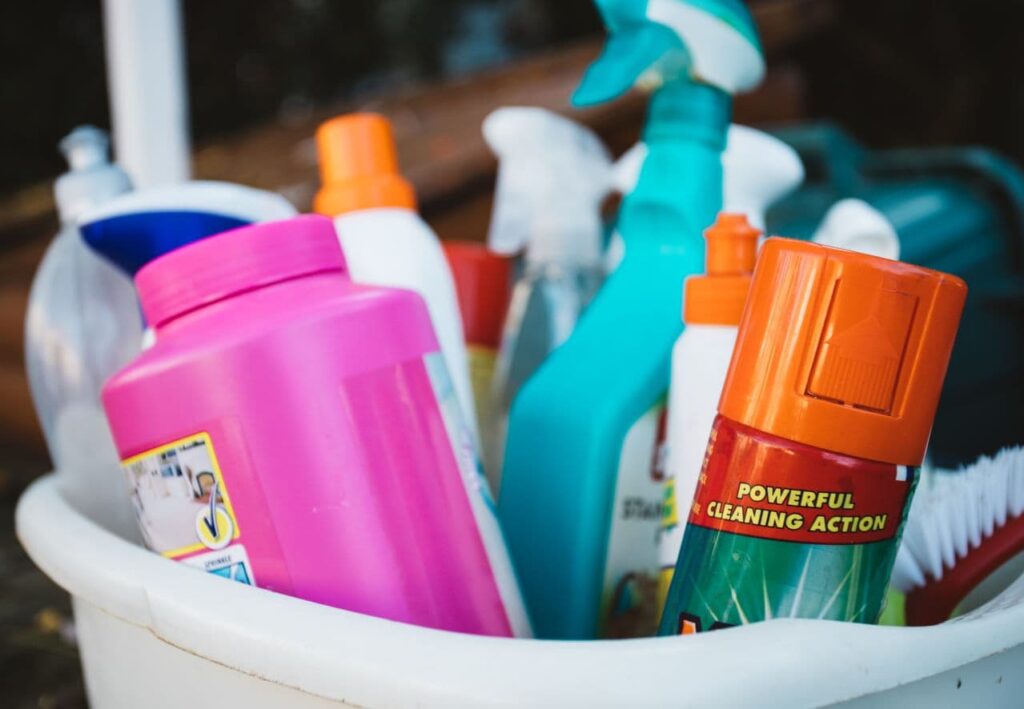
- Cleaning products, disinfectants, and bleach
- Paints, varnishes, stains, and wood treatments
- Adhesives, solvents, and thinners
- Oils, lubricants, and fuels
- Hair dyes, perming solutions, and salon chemicals
- Pesticides, herbicides, and fertilisers
- Dusts generated by cutting, grinding, or sanding (including wood dust and silica dust)
- Fumes from welding, soldering, or hot work
If you are unsure whether a substance is covered, check the Safety Data Sheet (SDS). Your supplier is legally required to provide one for any hazardous substance. If the SDS exists, a COSHH assessment is almost certainly required.
Which businesses need a COSHH assessment?
Any business that uses, handles, produces, or stores substances that are hazardous to health. This includes:
- Hair and beauty salons — dyes, bleaches, perming solutions, cleaning products
- Garages and MOT centres — oils, brake fluid, battery acid, degreasers, solvents
- Cleaning companies — virtually every product used is COSHH relevant
- Cafes, restaurants, and food businesses — cleaning chemicals, descalers, sanitisers
- Builders and tradespeople — paints, adhesives, solvents, timber treatments, cement
- Farmers and agricultural businesses — pesticides, herbicides, fertilisers, fuels
- Print and signage companies — inks, solvents, adhesives
- Nail and beauty technicians — acrylics, gel products, adhesives, acetone
- Tattoo studios — inks, cleaning chemicals, skin preparations
This list is not exhaustive. If you are not sure, the question to ask yourself is: do we use anything that could harm someone’s health through inhalation, skin contact, eye contact, or ingestion? If the answer might be yes, you need a COSHH assessment.
What does a COSHH assessment need to cover?
A compliant COSHH assessment must include, for each hazardous substance:
- The substance name, form (liquid, aerosol, powder, etc.), and what it is used for
- The hazard classification under GHS/CLP regulations
- The routes of exposure — inhalation, skin contact, eye contact, or ingestion
- Who is at risk and how they could be harmed
- Existing controls already in place
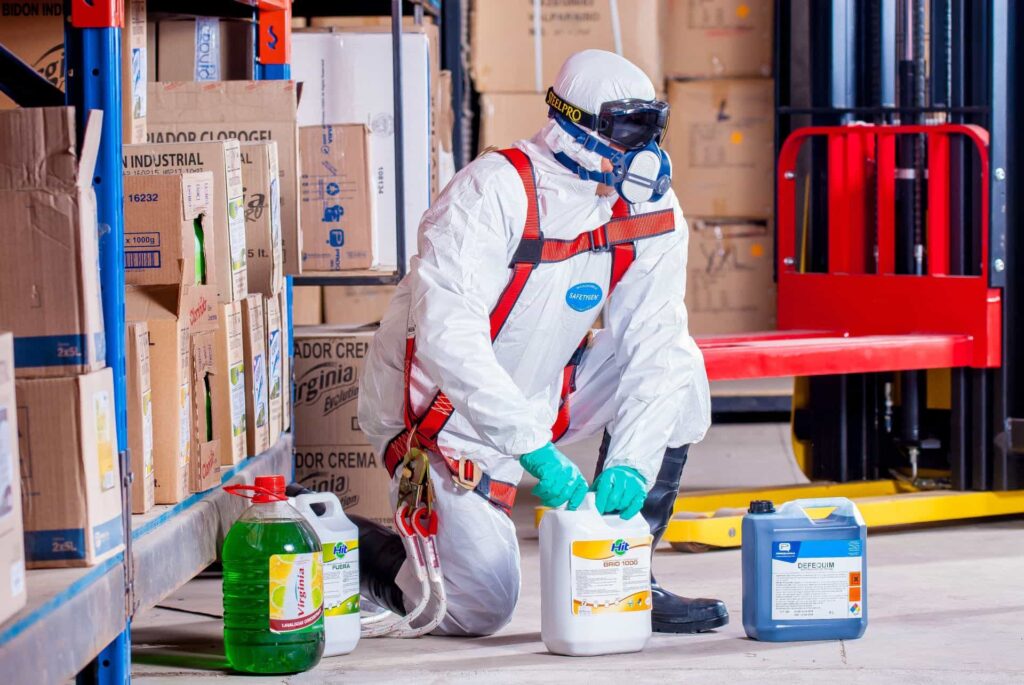
- Additional controls required (PPE, ventilation, storage, handling procedures, training)
- A risk rating before and after controls
- A review date — assessments must be reviewed at least every 12 months
The assessment must also be communicated to the employees who work with the substances. It is not enough to produce the document and file it away — staff must be made aware of the findings.
What happens if you don’t have one?
An HSE inspector can visit any business at any time, with or without prior notice. If your COSHH documentation is missing, out of date, or does not reflect your actual workplace and processes, you could face:
- An improvement notice — a formal legal notice requiring you to fix the issue within a set timeframe
- A prohibition notice — an immediate halt of the activity causing the risk
- A Fee for Intervention — HSE charges for the time spent investigating a breach, currently £163 per hour
- Prosecution — for serious or repeated breaches, fines are unlimited. The average HSE fine for prosecuted cases exceeds £100,000
Beyond the legal consequences, inadequate COSHH controls can cause real harm — occupational asthma, dermatitis, chemical burns, and long-term respiratory conditions are all associated with inadequate management of hazardous substances at work.
Common mistakes small businesses make
The most common COSHH mistake is using a generic downloaded template and assuming it covers everything. It doesn’t. A COSHH assessment must reflect the actual substances used at your specific workplace, in your specific processes, by your specific staff. A template that hasn’t been tailored to your business will not hold up to scrutiny.
Other common mistakes include:
- Leaving substances off the assessment — it is easy to forget everyday items like cleaning sprays
- Not having Safety Data Sheets on site for every substance assessed
- Not reviewing assessments annually or when substances or processes change
- Completing the assessment but not communicating the findings to staff
- Recording controls that are not actually in place
What should you do next?
Start by listing every substance your business uses that could be hazardous. Include everything — even products you use every day without thinking about them. Check each one for a hazard warning symbol or Safety Data Sheet.
If you have substances that require assessment and you don’t yet have compliant documentation, the simplest route is to work with a qualified H&S consultant who can produce the assessments for you. A proper COSHH assessment for a small business with up to ten substances takes a consultant a few hours to produce — and gives you documentation that will withstand HSE scrutiny.
Need your COSHH assessment sorted?
Ironshore Safety provides COSHH assessments for small businesses across the Southwest. Every assessment is produced by a qualified consultant — IOSH Managing Safely certified — and tailored to your specific workplace and substances. Fixed pricing from £350, turned around within 5 working days.
Get in touch for a free 15-minute call — I’ll tell you exactly what you need and what it’ll cost. No obligation.
Ironshore Safety is based in Braunton, North Devon and serves businesses across the Southwest.